 Image 1 of 4
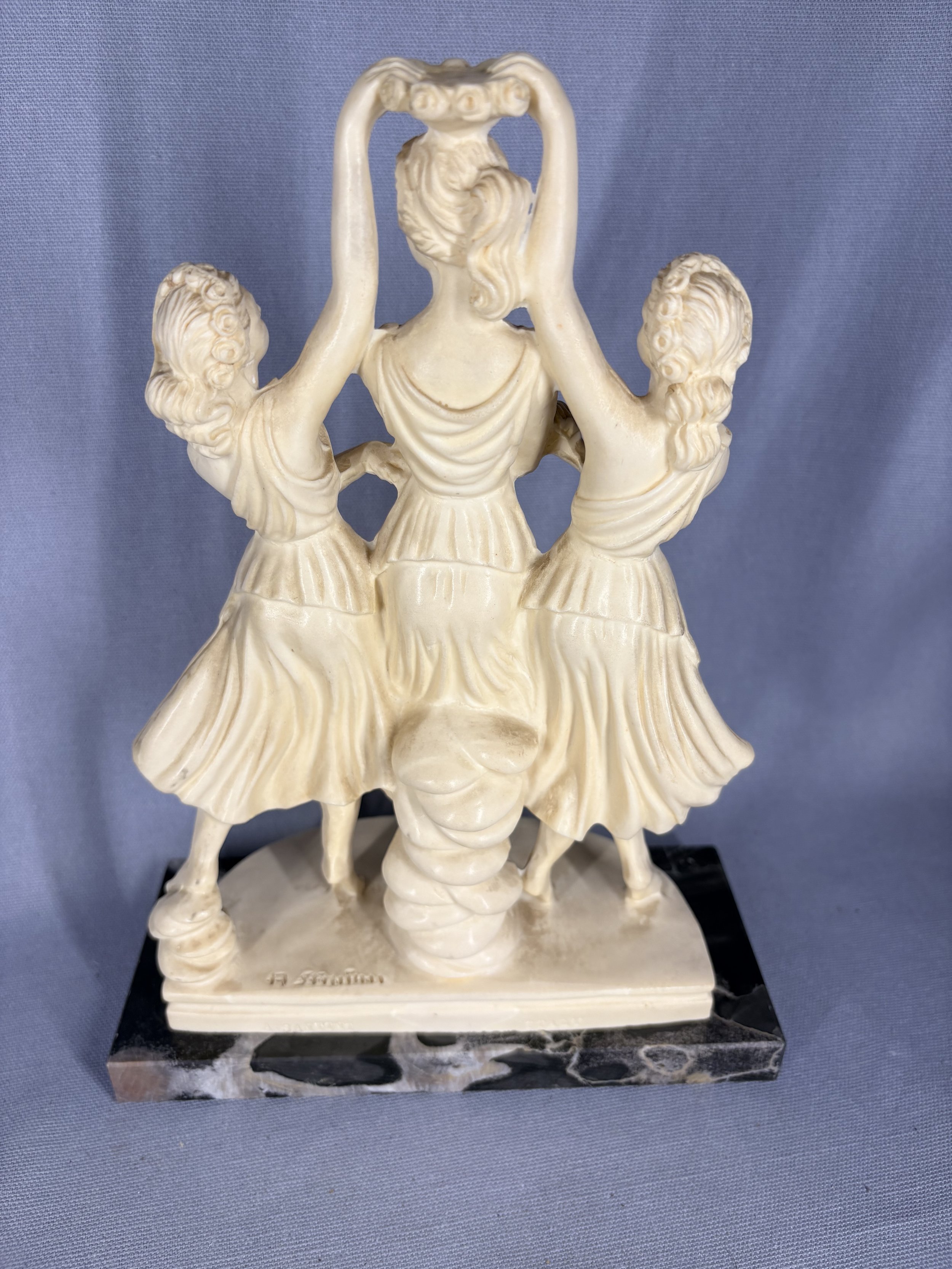 Image 2 of 4
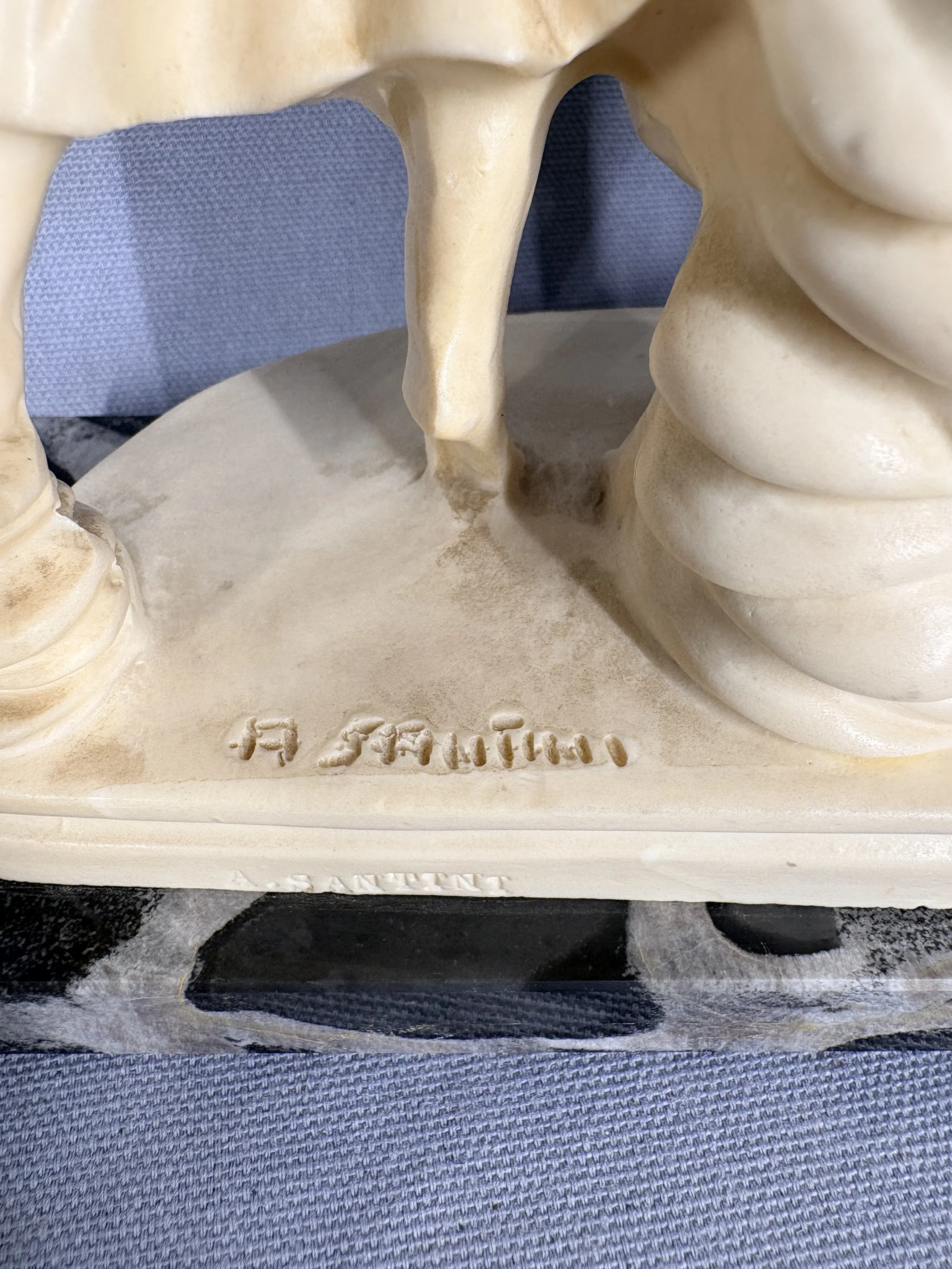 Image 3 of 4
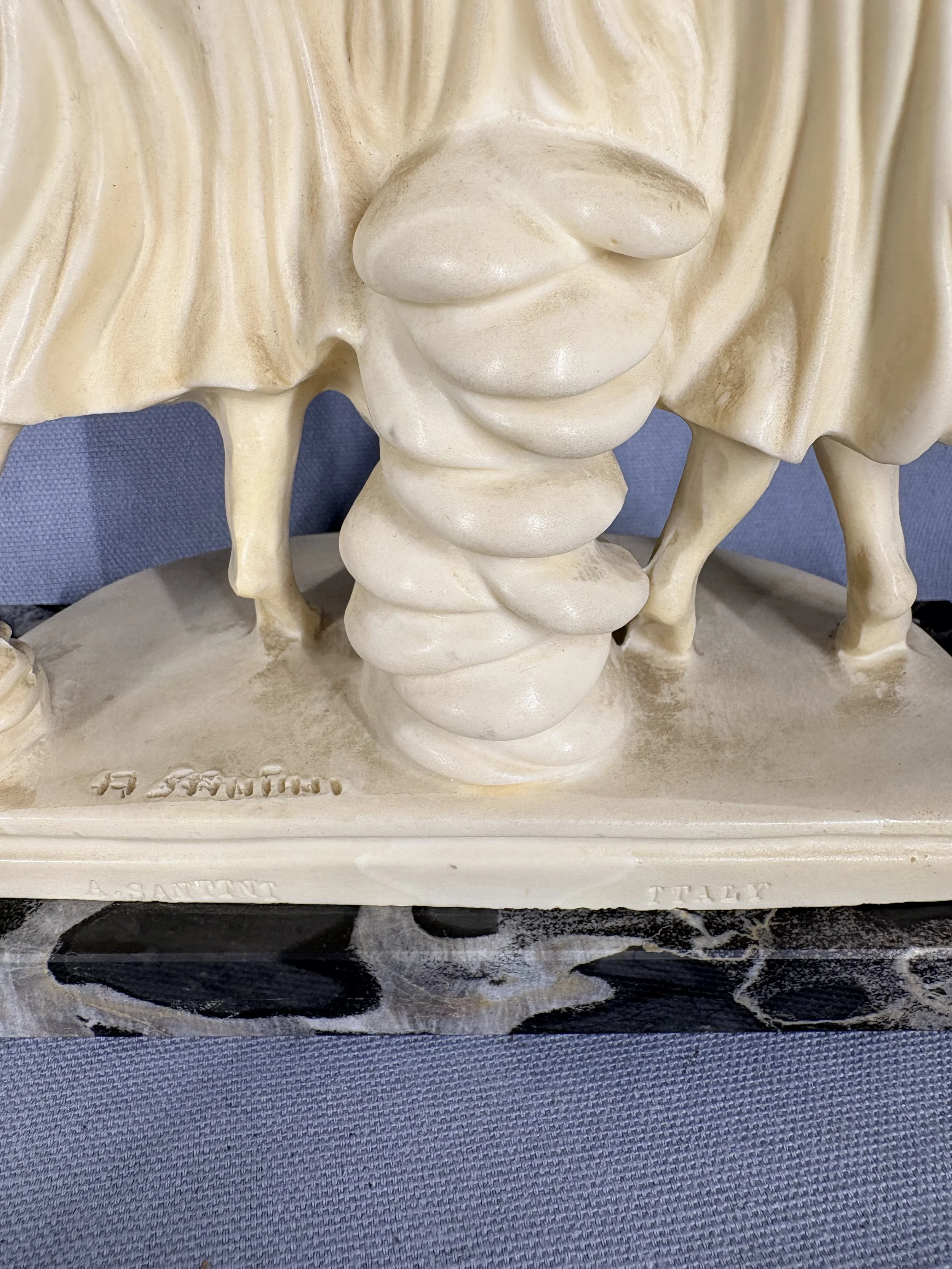 Image 4 of 4
“The Three Graces”
Signed: A. Santini
Origin: Italy
Medium: Bonded marble / resin composite
Base: Polished stone base with engraved signature
Catalogue Essay
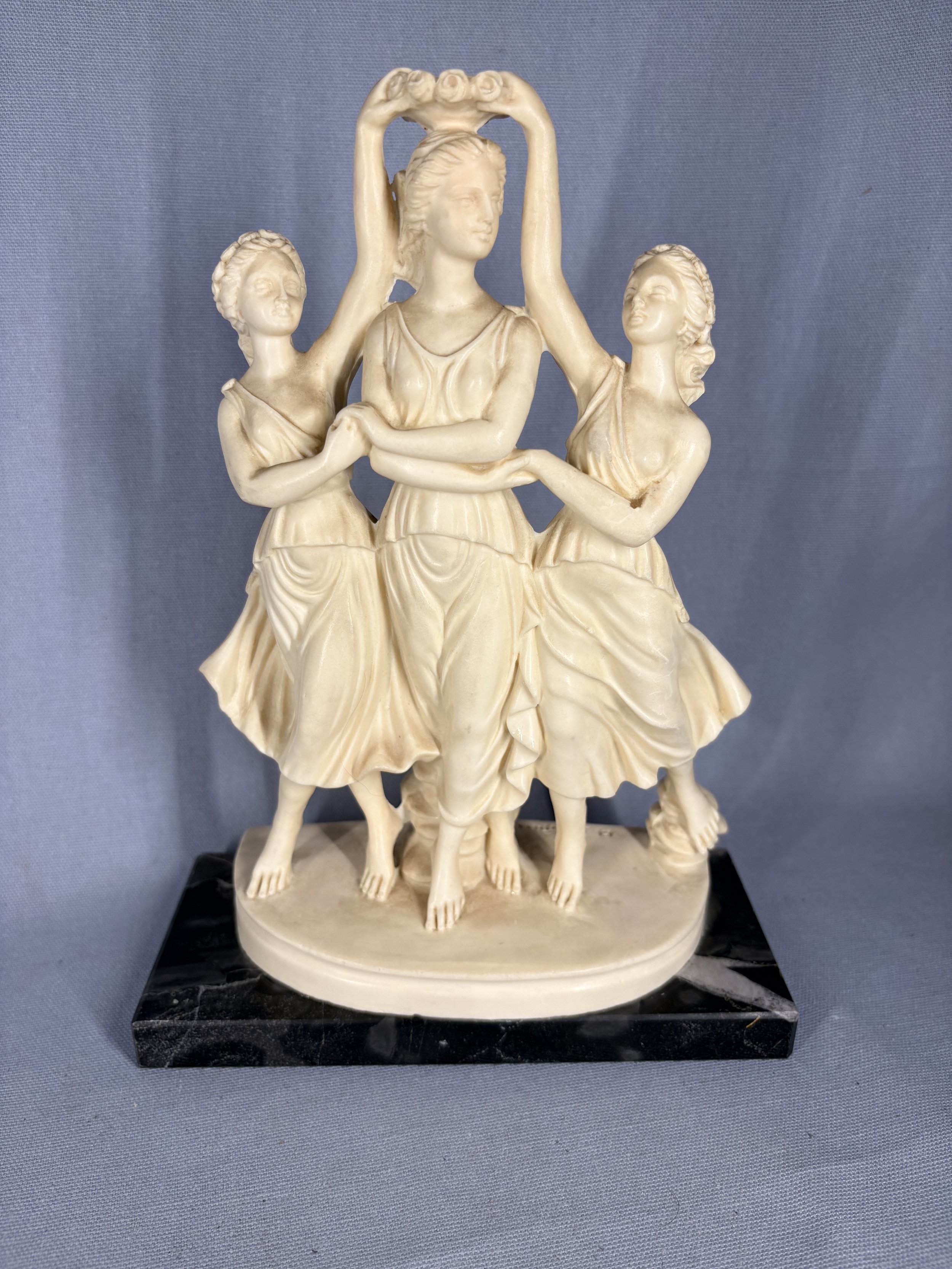
This elegant figural group, attributed to the Italian sculptor A. Santini, presents a refined interpretation of the classical motif known as The Three Graces. The three maidens stand in close harmony, their forms intertwined in a balanced and lyrical composition. The central figure raises a wreath aloft, flanked by two companions whose gestures convey unity, grace, and classical serenity.
Santini’s workshop became internationally recognised during the mid‑20th century for its revivalist approach to Greco‑Roman subjects. Works such as this example demonstrate the atelier’s ability to capture the softness of drapery, the idealised proportions of the female form, and the decorative appeal that made Santini sculptures highly sought after in Europe, North America, and Australia.
Executed in a pale bonded marble composite, the sculpture achieves the visual presence of carved stone while allowing for crisp detailing and smooth surfaces. The piece is mounted on a dark, veined stone base, engraved with the artist’s signature A. Santini and marked Italy, confirming its origin and authenticity.
“The Three Graces”
Signed: A. Santini
Origin: Italy
Medium: Bonded marble / resin composite
Base: Polished stone base with engraved signature
Catalogue Essay
This elegant figural group, attributed to the Italian sculptor A. Santini, presents a refined interpretation of the classical motif known as The Three Graces. The three maidens stand in close harmony, their forms intertwined in a balanced and lyrical composition. The central figure raises a wreath aloft, flanked by two companions whose gestures convey unity, grace, and classical serenity.
Santini’s workshop became internationally recognised during the mid‑20th century for its revivalist approach to Greco‑Roman subjects. Works such as this example demonstrate the atelier’s ability to capture the softness of drapery, the idealised proportions of the female form, and the decorative appeal that made Santini sculptures highly sought after in Europe, North America, and Australia.
Executed in a pale bonded marble composite, the sculpture achieves the visual presence of carved stone while allowing for crisp detailing and smooth surfaces. The piece is mounted on a dark, veined stone base, engraved with the artist’s signature A. Santini and marked Italy, confirming its origin and authenticity.