 Image 1 of 1
Origin: India
Date: Mid–late 20th century
Material: Terracotta with painted surface
Dimensions: approx. 20–25 cm long (estimate from image)
Description:
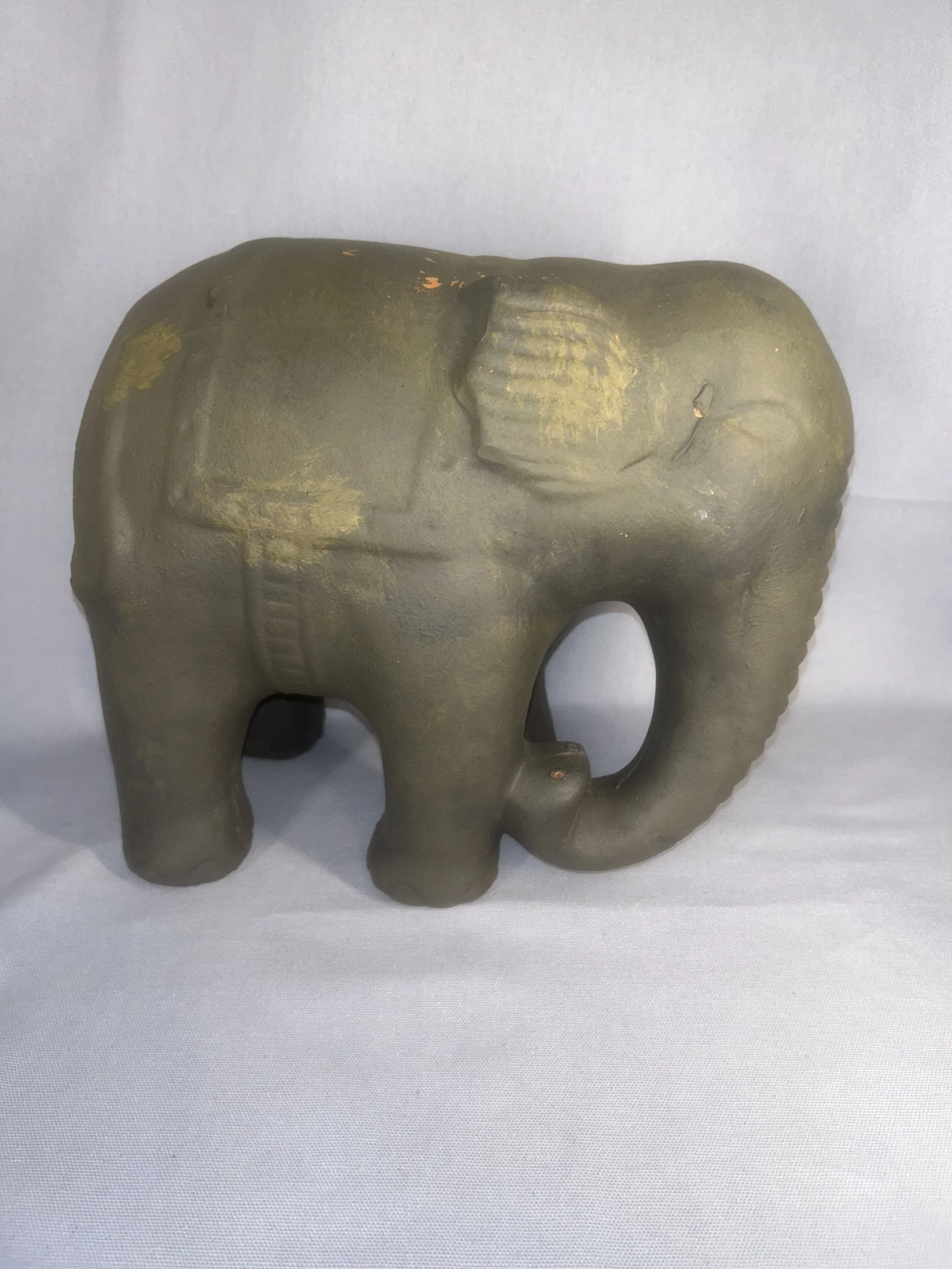
A solid terracotta model of an elephant, modelled in a simplified, folk-art manner with rounded forms and minimal detailing. The figure retains traces of its original painted surface, now softened and worn with age, lending a pleasing, timeworn patina. The curled trunk and blanket-style saddle detail across the back are characteristic of decorative Indian export wares inspired by traditional animal symbolism.
Elephants hold strong cultural significance in India, associated with strength, protection and good fortune, and figures of this type were commonly produced for the decorative and tourist market in the mid to late 20th century.
Origin: India
Date: Mid–late 20th century
Material: Terracotta with painted surface
Dimensions: approx. 20–25 cm long (estimate from image)
Description:
A solid terracotta model of an elephant, modelled in a simplified, folk-art manner with rounded forms and minimal detailing. The figure retains traces of its original painted surface, now softened and worn with age, lending a pleasing, timeworn patina. The curled trunk and blanket-style saddle detail across the back are characteristic of decorative Indian export wares inspired by traditional animal symbolism.
Elephants hold strong cultural significance in India, associated with strength, protection and good fortune, and figures of this type were commonly produced for the decorative and tourist market in the mid to late 20th century.