 Image 1 of 3
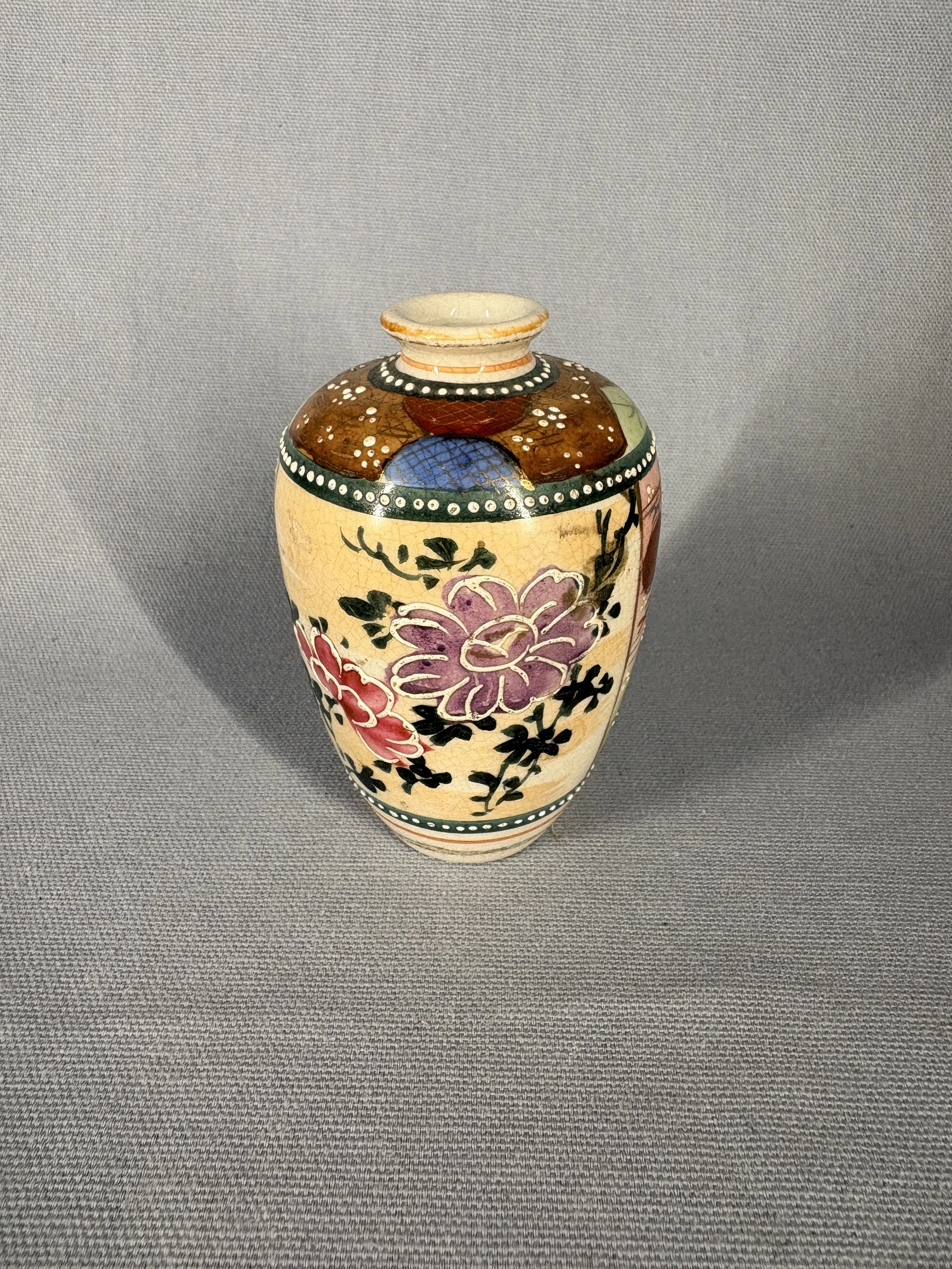 Image 2 of 3
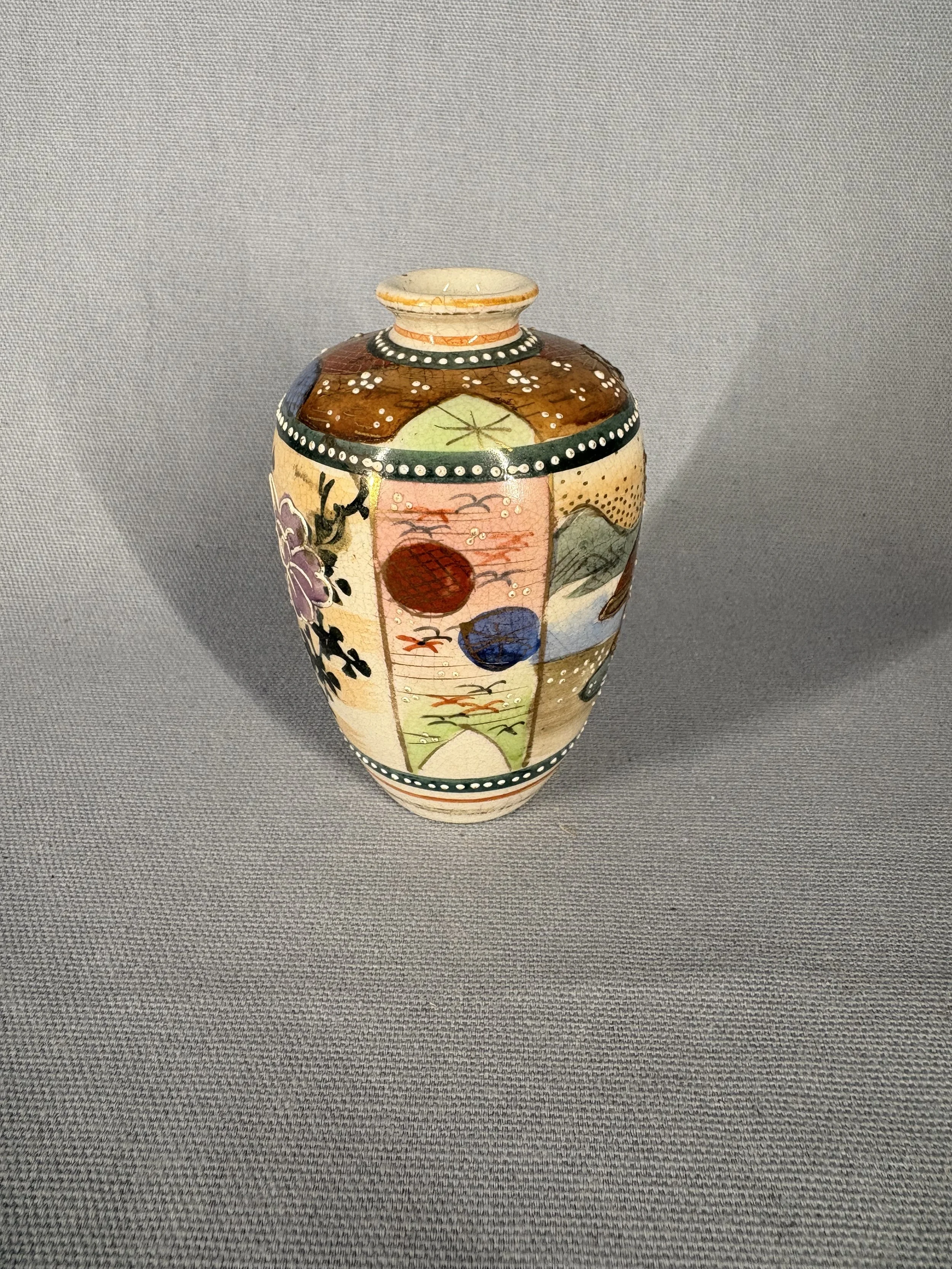 Image 3 of 3
Origin: Japan
Date: Late Meiji to Taishō period, circa 1900–1920
Material: Glazed earthenware (Satsuma ware)
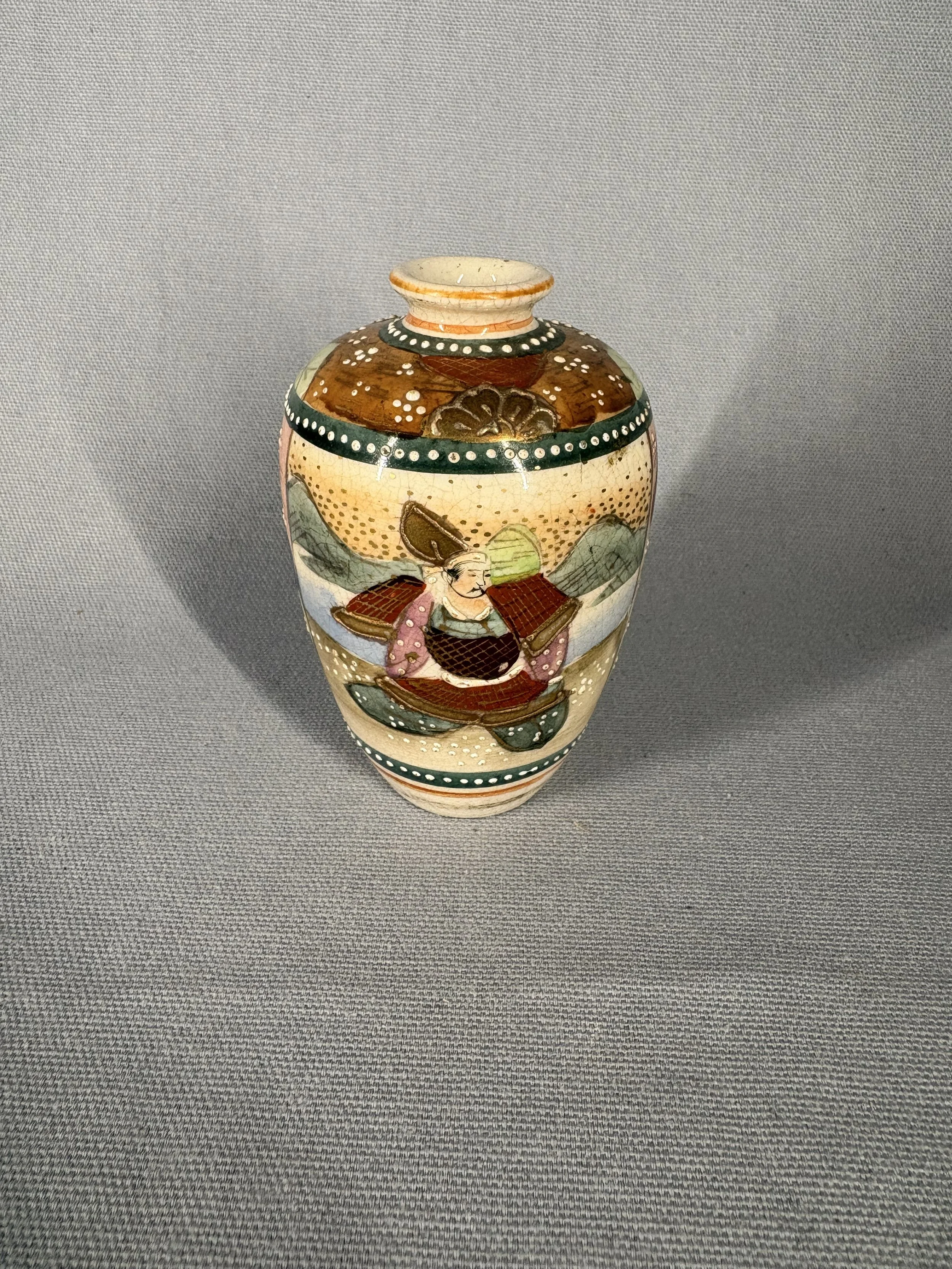
A finely decorated small Japanese Satsuma cabinet vase of ovoid form with a short, slightly flared neck. The body is richly hand-painted in polychrome enamels and gilt over a finely crackled ivory ground.
The decoration features alternating panels, including:
• A figural scene of a traditionally dressed figure in a landscape setting
• Stylised floral motifs with bold chrysanthemum-style blooms
• Geometric and symbolic panels incorporating landscape elements, sun motifs, and birds in flight
The shoulder is encircled by a band of intricate dot and diaper ornament in gilt and enamel, a hallmark of Satsuma craftsmanship. The base glaze exhibits the characteristic fine crackle (crazing) associated with this ware.
This type of Satsuma ware was produced for both domestic use and export during the late 19th and early 20th centuries, often intended as decorative cabinet pieces. The combination of figural and floral panel work is typical of Kyoto workshop production.
Origin: Japan
Date: Late Meiji to Taishō period, circa 1900–1920
Material: Glazed earthenware (Satsuma ware)
A finely decorated small Japanese Satsuma cabinet vase of ovoid form with a short, slightly flared neck. The body is richly hand-painted in polychrome enamels and gilt over a finely crackled ivory ground.
The decoration features alternating panels, including:
• A figural scene of a traditionally dressed figure in a landscape setting
• Stylised floral motifs with bold chrysanthemum-style blooms
• Geometric and symbolic panels incorporating landscape elements, sun motifs, and birds in flight
The shoulder is encircled by a band of intricate dot and diaper ornament in gilt and enamel, a hallmark of Satsuma craftsmanship. The base glaze exhibits the characteristic fine crackle (crazing) associated with this ware.
This type of Satsuma ware was produced for both domestic use and export during the late 19th and early 20th centuries, often intended as decorative cabinet pieces. The combination of figural and floral panel work is typical of Kyoto workshop production.